

It’s summer, you’re sitting outside, enjoying a morning coffee on your terrace or a barbecue with friends and family, and somehow, you’re getting bitten. Not in the evening, but in the middle of the day. If that sounds familiar, chances are you’re dealing with the tiger mosquito.
Unlike traditional mosquitoes, this one doesn’t wait for sunset. It’s active, persistent, and increasingly common across Europe. The good news? Once you understand how it behaves, it becomes much easier to spot. And more importantly, to protect yourself effectively.
What Is a Tiger Mosquito?
The tiger mosquito (Aedes albopictus) is an invasive species originally from Southeast Asia. Over the past few decades, it has spread rapidly across Europe, thriving in urban environments and warmer climates.
What makes it different from the mosquitoes you might be used to is its adaptability. It breeds in very small amounts of standing water and has learned to live close to humans. Balconies, gardens, and even small outdoor containers can become ideal breeding spots.
It’s also known for being more aggressive. If you feel like you’re being bitten more frequently than usual, you’re probably not imagining it.
How to Recognise a Tiger Mosquito
Spotting a tiger mosquito isn’t as difficult as it sounds once you know what to look for.
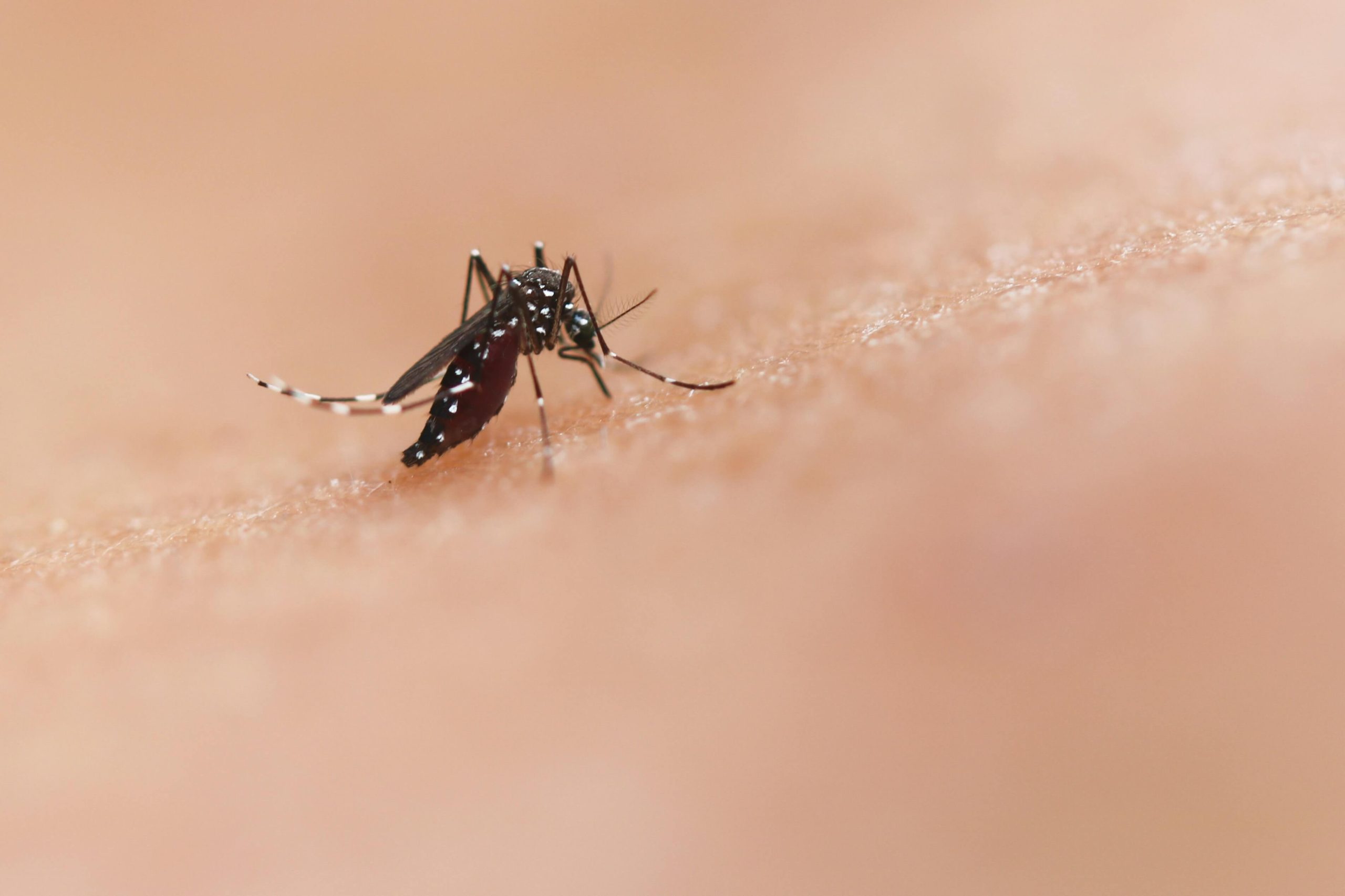
The most distinctive feature is its appearance:
- A small, dark body
- Clear white stripes on its legs and body
- A slightly more compact shape than common mosquitoes
It also behaves differently. Tiger mosquitoes tend to:
- Fly low, often around your legs and ankles
- Stay active during the day
- Bite quickly and repeatedly
A simple clue? If you’re getting bitten in broad daylight, it’s very likely not a typical mosquito.
When Do Tiger Mosquitoes Bite?
One of the biggest surprises for most people is that tiger mosquitoes are daytime biters.
Their peak activity usually happens:
- Early in the morning
- Late in the afternoon
That said, they can remain active throughout the day, especially in shaded outdoor areas.
This is what makes them particularly frustrating, traditional mosquito habits (like only protecting yourself in the evening) simply don’t work anymore.
Why Are Tiger Mosquitoes a Concern?
Beyond the irritation of bites, tiger mosquitoes are also known for their potential to transmit certain diseases, including:
- Dengue
- Chikungunya
- Zika
While the risk remains relatively low in many parts of Europe, it is something that health authorities monitor closely as the species continues to spread.
That said, for most people, the main issue is still the frequency and intensity of bites.
How to Protect Yourself from Tiger Mosquitoes
When it comes to tiger mosquitoes, a combination of simple habits and effective tools makes all the difference.
Eliminate Standing Water
Tiger mosquitoes need very little water to breed. That’s why it’s important to regularly check:
- Flower pot saucers
- Buckets and containers
- Gutters and drains
- Outdoor furniture that collects rainwater
Even small amounts can be enough to support larvae.
Use Personal Protection
Basic protection still plays a role:
- Apply mosquito repellent when needed
- Wear light, covering clothing in high-risk areas
- Use fans outdoors (mosquitoes struggle in airflow)
However, with tiger mosquitoes, this is often not enough on its own – especially if they’re already established around your home.
Use Targeted Mosquito Traps
If tiger mosquitoes are already present around your home, prevention alone often isn’t enough. This is where targeted mosquito traps become particularly effective as they don’t just repel mosquitoes, they actively reduce the population over time.
Unlike sprays or repellents, these solutions work continuously in the background, helping you reclaim your space more sustainably, both outdoors and indoors.
HexaTrap: Outdoor, everyday protection
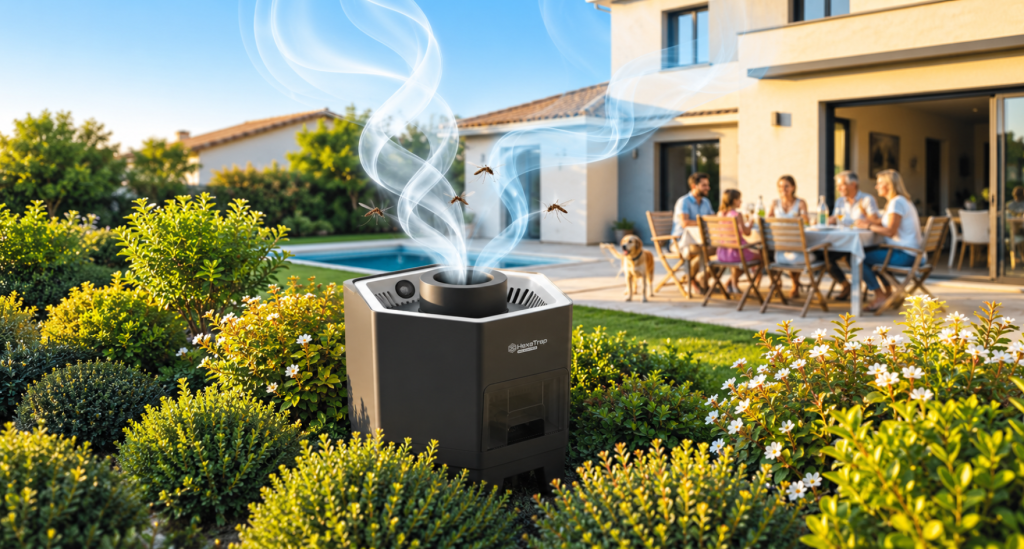
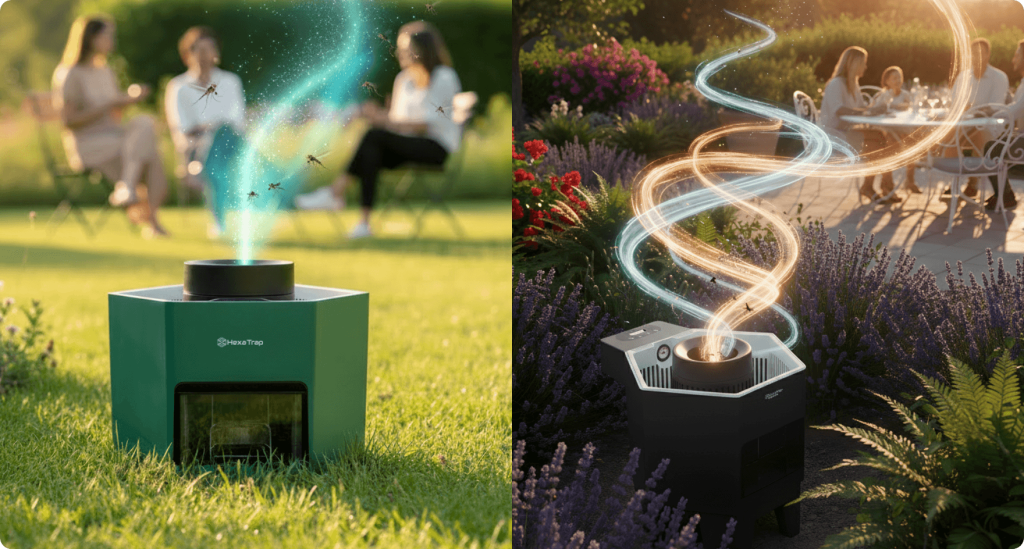
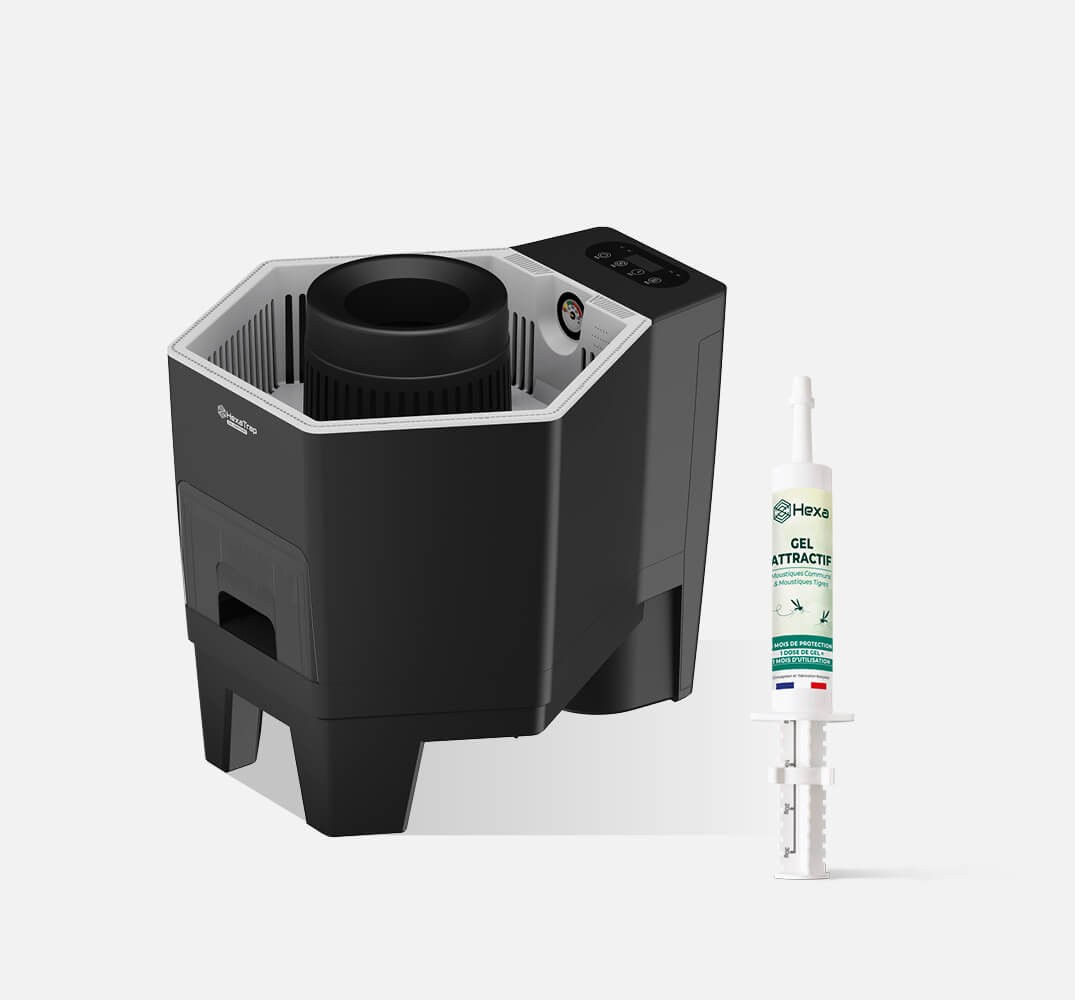
If you’re looking for a reliable outdoor solution, HexaTrap is a strong starting point.
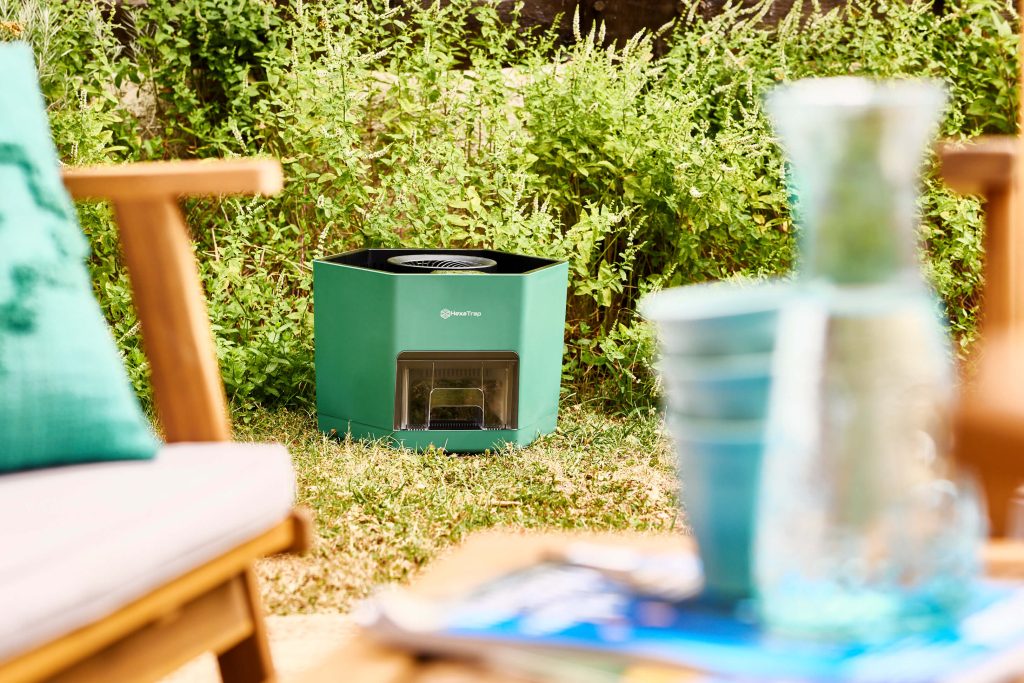
It works by attracting mosquitoes, tiger and common ones, using a specific lure that mimics human scent, then capturing them through a controlled airflow system. Once trapped, they can’t escape and are eliminated naturally.
Designed for outdoor use, it’s ideal for:
- Terraces
- Balconies
- Gardens
With continuous use, it helps reduce the mosquito population over time, not just prevent bites in the moment.
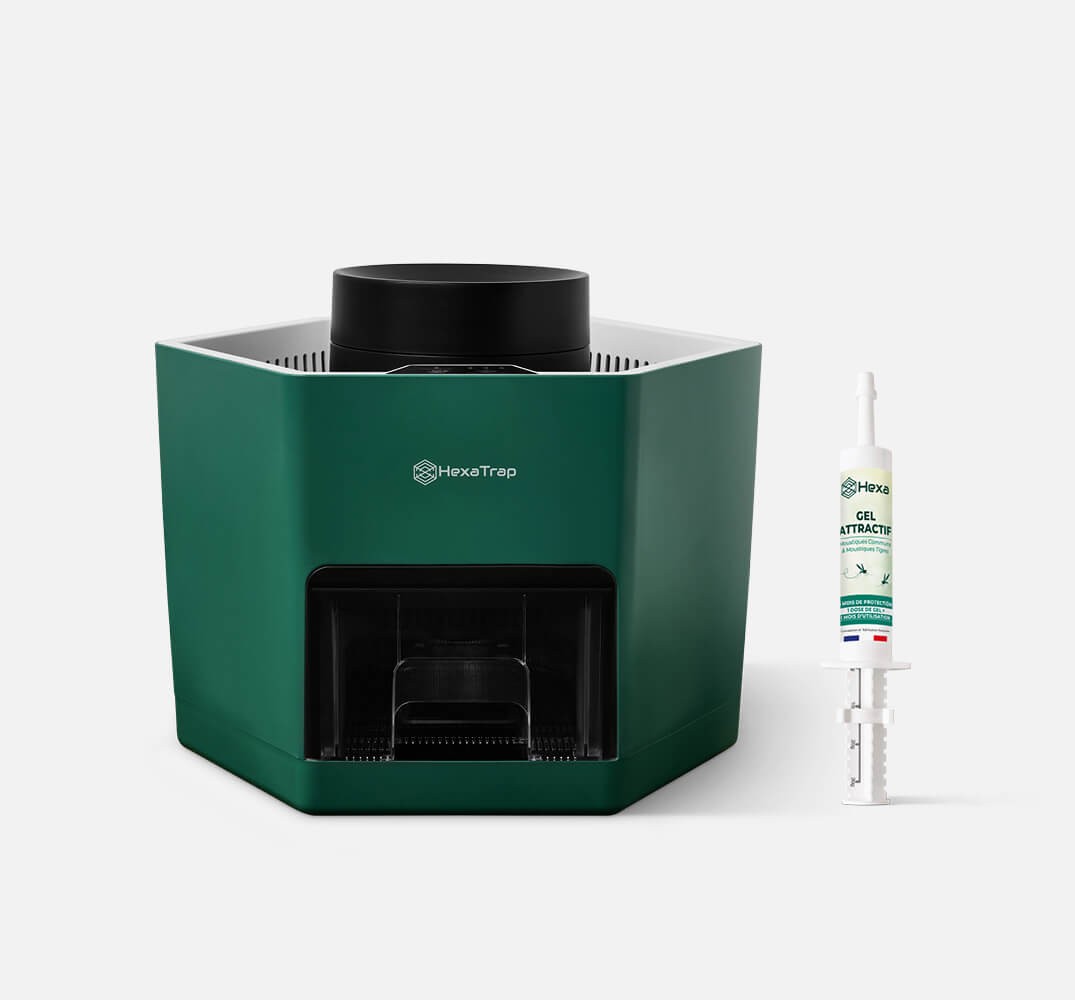
- Piège extérieur qui attire, aspire et capture les moustiques tigres et communs en reproduisant l’odeur humaine
- Réduit la présence de moustiques jusqu’à 300 m²
HexaSafe: Discreet indoor protection
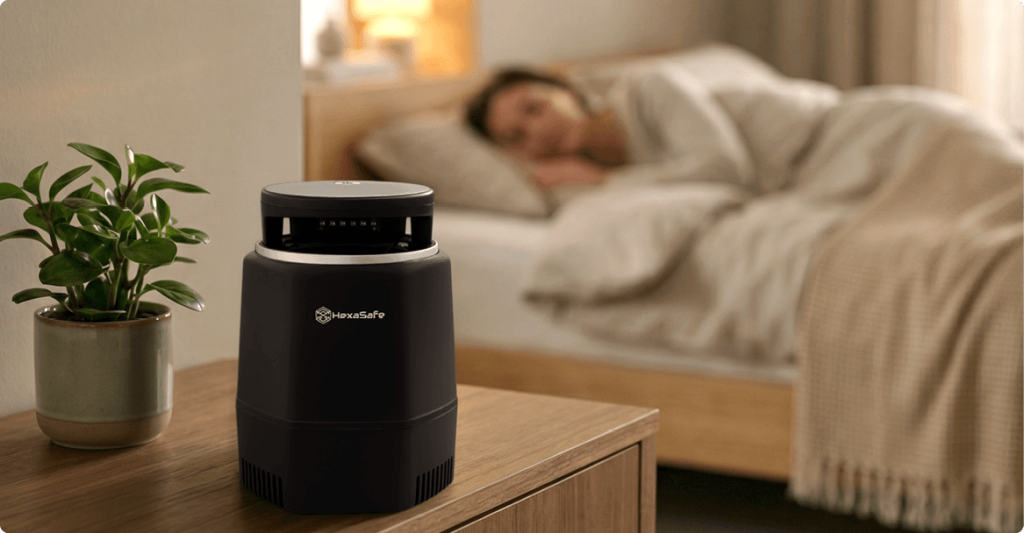
For indoor spaces, HexaSafe offers a completely different approach. This trap is specifically designed to be used inside the home — in a bedroom, living room or even a workspace. It works silently and without chemicals, making it easy to run continuously, day and night.
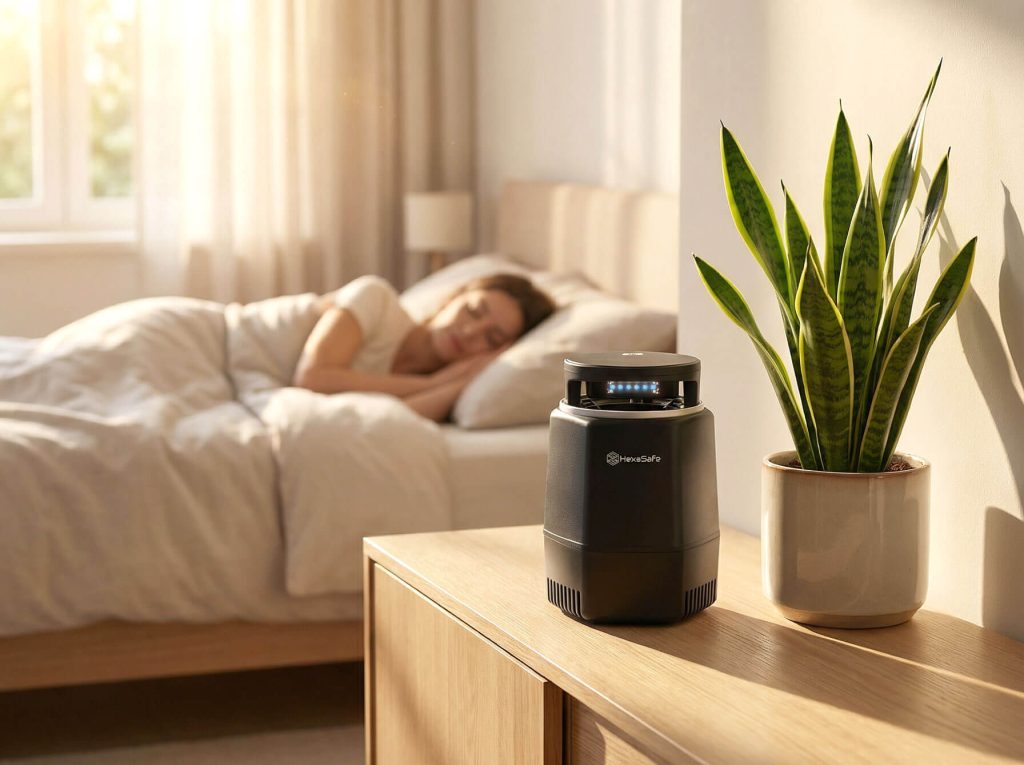
Using a combination of an attractant gel and a gentle ventilation system, it draws mosquitoes in before they have a chance to bite, and traps them inside.
It’s particularly useful if:
- Mosquitoes are entering your home in the evening
- You want peaceful, bite-free nights
- You prefer a low-maintenance, discreet solution
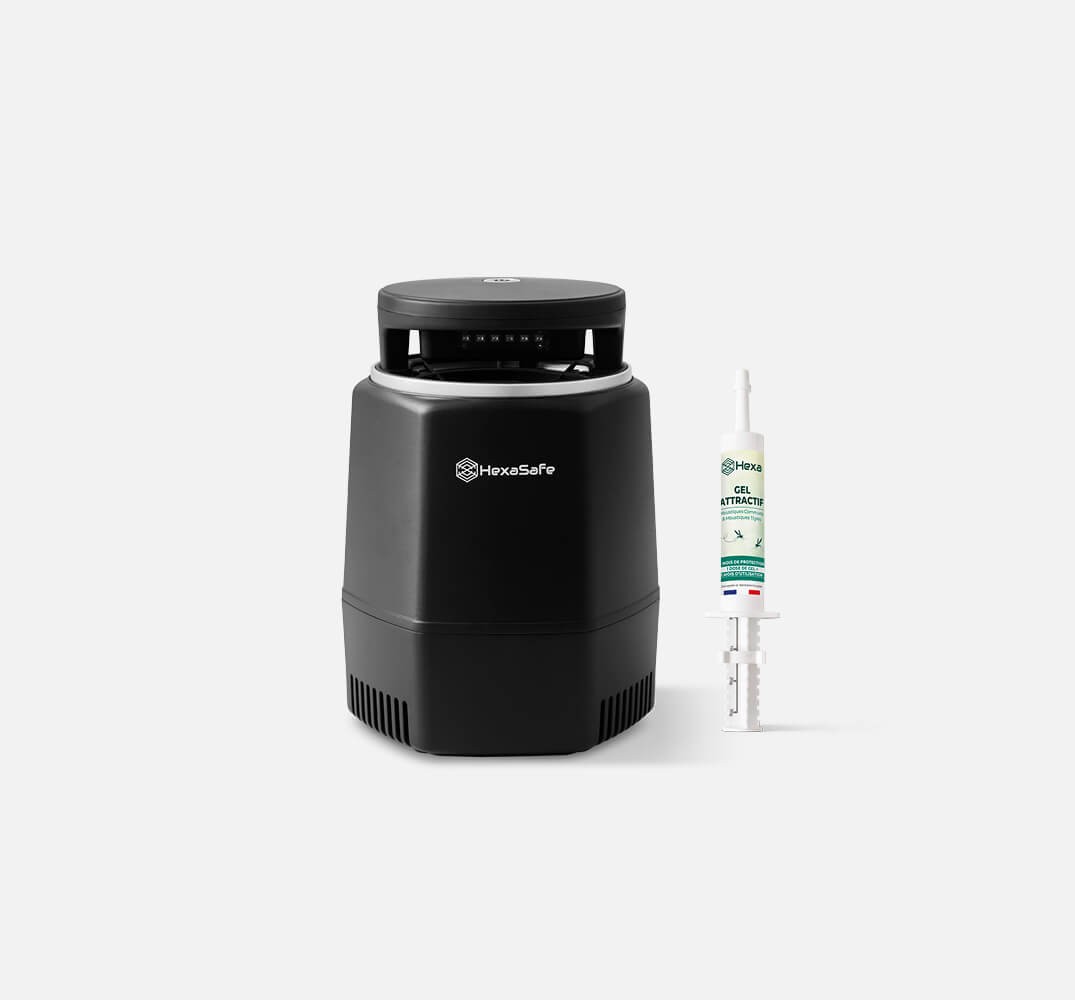
- Piège intérieur discret et silencieux qui attire et capture les moustiques grâce à un attractif olfactif et une lumière UV (facultative)
- Réduit la présence de moustiques dans la maison sans insecticide ni pulvérisation
HexaTrap CO₂ Capture: Advanced outdoor control
If you’re dealing with a higher level of mosquito activity, HexaTrap CO₂ Capture provides a more advanced solution.

It works by reproducing one of the main signals mosquitoes use to locate humans: carbon dioxide (CO₂). By mimicking human breathing, it attracts mosquitoes from a wider area and captures them more efficiently.
This makes it especially effective for:
- Larger gardens
- Areas with dense vegetation
- Locations where tiger mosquitoes are well established
It’s a more powerful, long-term approach designed to significantly reduce mosquito presence in outdoor environments.
- Efficacité boostée grâce au CO₂ qui attire les moustiques sur une longue distance
- Application mobile intégrée pour contrôler le piège et optimiser la diffusion du CO₂
- Réduit la présence de moustiques jusqu’à 500 m²
- Compatible avec tous les cylindres de CO₂ standard à visser
How to choose the right mosquito trap
The right solution depends on your specific situation:
- Outdoor nuisance → HexaTrap or HexaTrap CO₂ Capture
- Indoor discomfort → HexaSafe
- High mosquito pressure → HexaTrap CO₂ Capture
If you’re unsure which option suits your needs best, you can use this quick tool to guide your choice.
A quick tip for better results
Whatever trap you choose, placement matters:
- Outdoors → place it in a shaded, slightly humid area, away from where you sit
- Indoors → position it in a calm, low-traffic area of the room
This helps attract mosquitoes away from you and towards the trap.
FAQ: Tiger Mosquitoes
What attracts tiger mosquitoes?
They are drawn to body heat, carbon dioxide (what we exhale), and stagnant water where they can breed.
Are tiger mosquito bites dangerous?
In most cases, bites are harmless but irritating. However, they can carry diseases in certain regions, which is why prevention matters.
Why do tiger mosquitoes bite during the day?
Unlike many other species, tiger mosquitoes have adapted to daytime activity, which gives them easier access to humans.
How can I get rid of tiger mosquitoes quickly?
There’s no instant fix, but combining water control, repellents, and effective traps is the most reliable way to reduce their presence.
Final thoughts
Tiger mosquitoes may be small, but they can have a big impact on your everyday comfort. The key is understanding how they behave – and adjusting your habits accordingly.
By learning to recognise them, staying mindful of breeding areas, and using the right protection tools, you can take back control of your outdoor spaces. Because enjoying your terrace, garden, or balcony should feel easy, and not like a constant battle against tiger mosquito bites.