

You’ve emptied the flowerpot saucers, checked the buckets, and made sure there’s no visible standing water left in your garden. And yet… the mosquitoes are still there.
If that sounds familiar, you’re not alone. Many people assume that simply removing visible water is enough to stop mosquitoes from breeding. It’s only part of the solution.
To truly reduce mosquito presence, especially tiger mosquitoes, you need to understand where they lay their eggs, how mosquito larvae develop in standing water, and how to interrupt their life cycle more effectively.
By the way if you’re curious about how to recognise tiger mosquitoes, and why they’re such a hot topic these days, we break it down in our dedicated guide. Plus how to protect yourself from these particularly aggressive insects.
Why Standing Water Attracts Mosquitoes
Mosquitoes are naturally drawn to standing water, as it provides the perfect environment for laying eggs.
Common mosquito breeding sites include:
- Flowerpot saucers
- Buckets and watering cans
- Gutters and drains
- Tarpaulins, covers, or garden furniture
- Children’s toys or containers forgotten outside
What makes tiger mosquitoes particularly difficult to control is their ability to breed in very small amounts of water, even something as small as a bottle cap can be enough.
From Standing Water to Mosquitoes: Understanding the Larvae Cycle
Mosquitoes go through four main stages:
- Eggs
- Larvae
- Pupae
- Adult mosquitoes
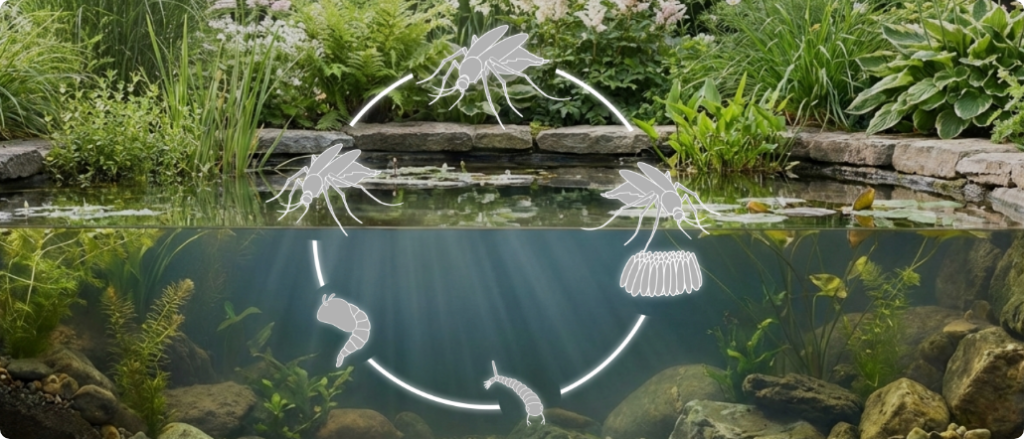
In warm weather, this entire cycle can take as little as 7 to 10 days. That means mosquito larvae in standing water can quickly turn into biting adults in just over a week.
Even more importantly, mosquito eggs can survive for months on dry surfaces, waiting for water to return. This is why simply emptying a container once does not always prevent mosquitoes from coming back.
Why Emptying Water Isn’t Always Enough
Removing standing water is essential, but it’s rarely enough to fully stop mosquito breeding.
Here’s why:
- Some water sources are easy to miss
- Rain quickly recreates breeding conditions
- Mosquito eggs can stick to surfaces even after water is removed
- Nearby environments can continue producing mosquitoes
In short, you’re often managing the symptoms, not eliminating the source.
To effectively stop mosquitoes breeding in your garden, you need to target the problem earlier: at the egg-laying stage.
The Key Role of Oviposition Traps
This is where oviposition traps (also known as breeding traps) come into play. Instead of trying to eliminate every possible water source, these traps:
- Attract female mosquitoes looking to lay eggs
- Encourage them to deposit eggs in a controlled environment
- Prevent mosquito larvae from developing into adults
In simple terms, they trap the breeding process itself.
This method is particularly effective for tiger mosquitoes, which are selective about where they lay their eggs.
HexaCatch: A Targeted Solution to Stop Mosquito Larvae in Standing Water
If you’re looking to actively stop mosquito larvae from developing in standing water, the HexaCatch trap is designed specifically for this purpose.
Unlike traditional mosquito traps that target adult insects, HexaCatch works earlier in the cycle, focusing on mosquito eggs and larvae.
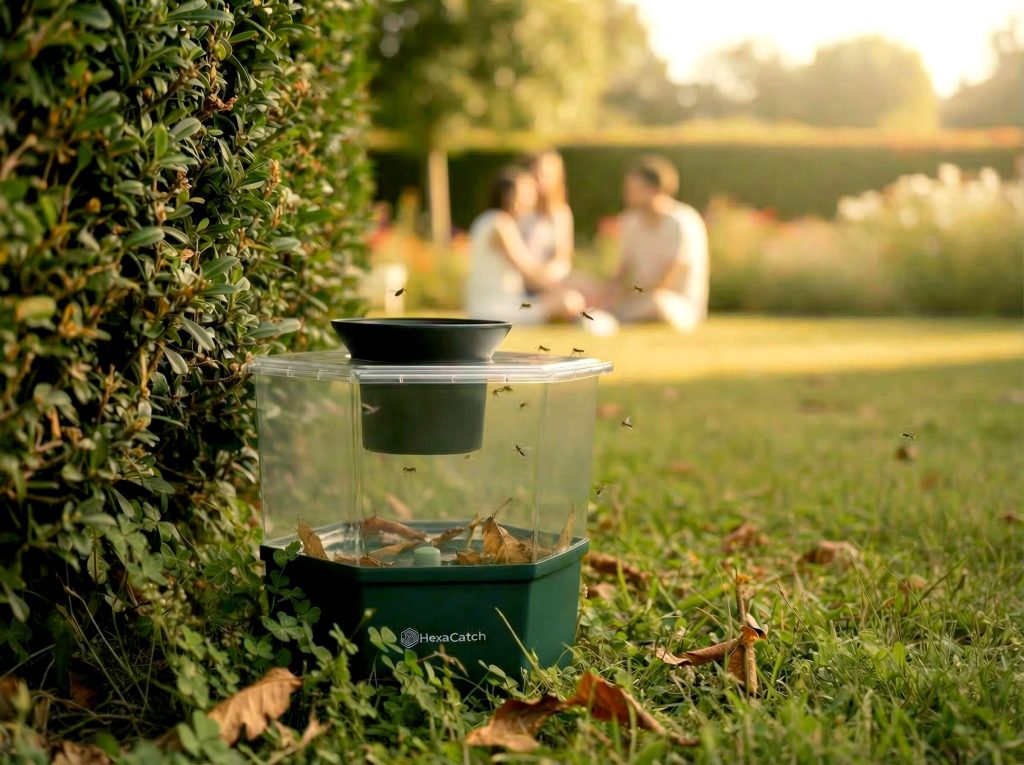
How HexaCatch works
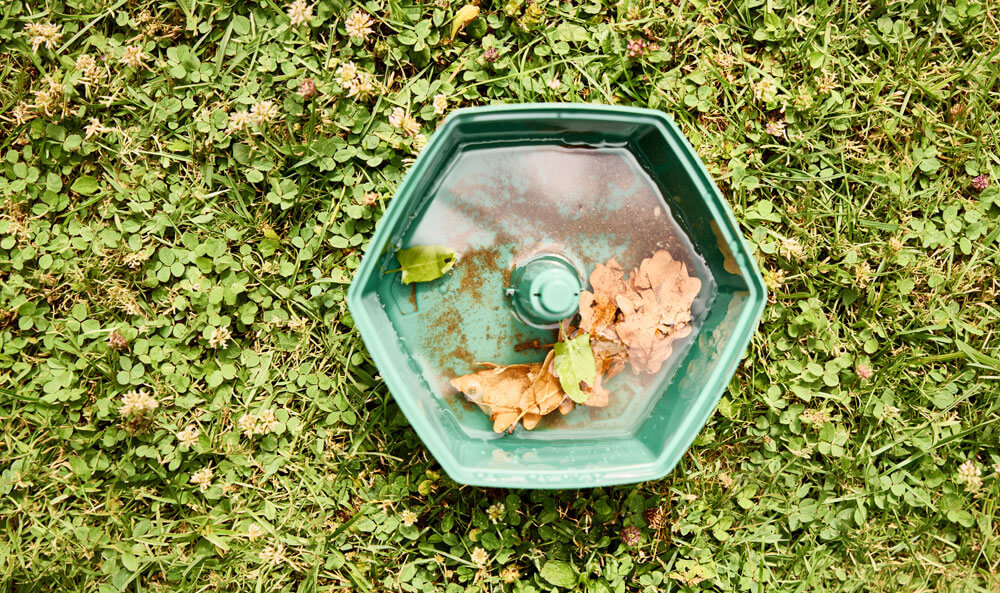
HexaCatch acts as an attractive breeding site for female mosquitoes. Drawn by the environment inside the trap, they lay their eggs there instead of in uncontrolled water sources around your garden.
However:
- The larvae cannot develop properly
- The life cycle is interrupted
- No new adult mosquitoes emerge
This makes HexaCatch particularly effective for preventing mosquito larvae in standing water and reducing future infestations.
Why HexaCatch makes a real difference
What makes this type of trap so effective is its preventive approach. Instead of reacting to mosquito bites, you:
- Reduce the number of future mosquitoes
- Limit mosquito population growth over time
- Target mosquito breeding sites directly
It’s especially useful when:
- You can’t eliminate every water source
- Mosquitoes are already present
- You want a long-term, low-maintenance solution
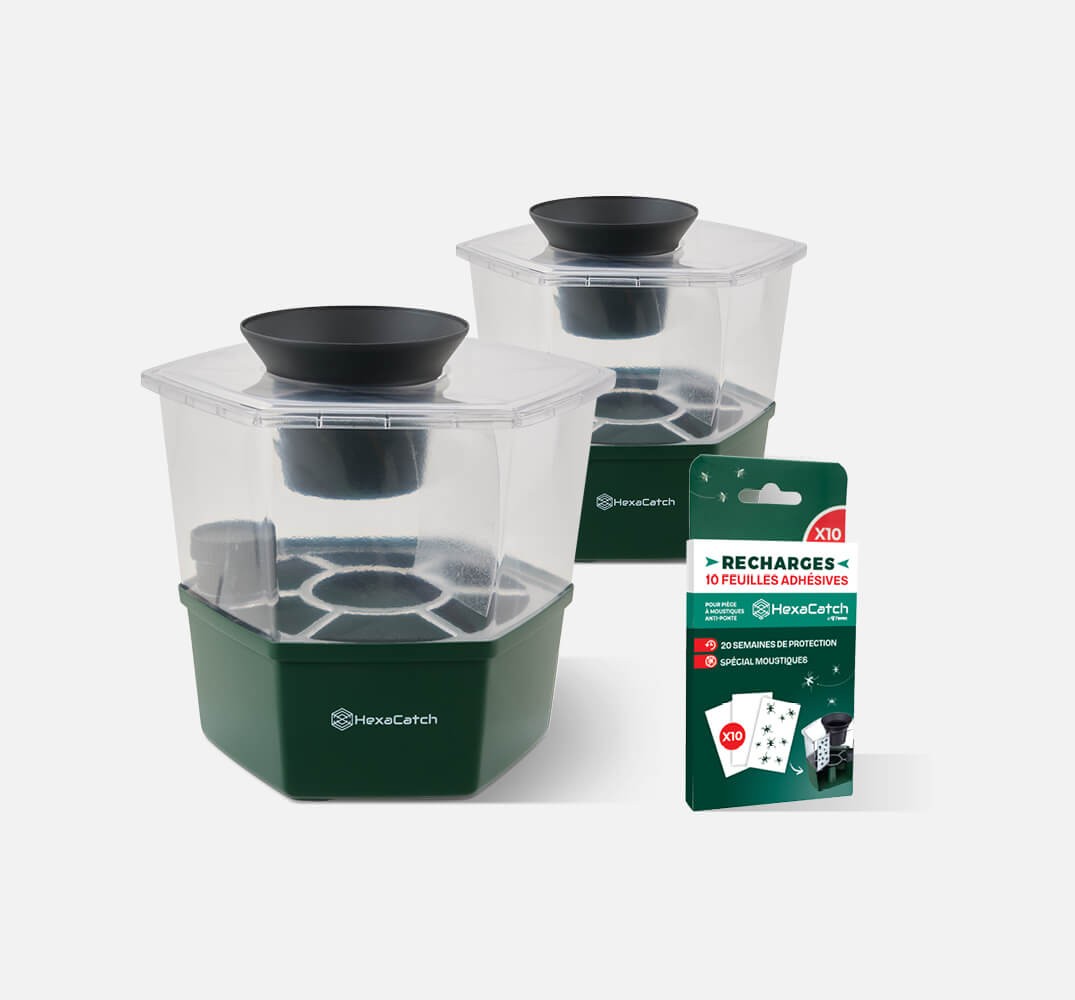
- Piège extérieur qui attire les moustiques femelles à la recherche d’un lieu de ponte et les capture sur une surface adhésive
- Réduit la reproduction des moustiques autour de votre jardin, sans insecticide ni électricité
Where and how to use it
For best results, place HexaCatch:
- In shaded, humid areas
- Near vegetation
- Close to known mosquito activity zones
Use it consistently throughout the mosquito season for optimal results.
When combined with basic prevention, it creates a much more effective mosquito control strategy. This approach helps move from temporary relief to long-term mosquito prevention.
FAQ: Standing Water and Mosquito Larvae
Do mosquitoes really breed in small amounts of water?
Yes, even very small amounts of standing water can support mosquito larvae, especially for tiger mosquitoes.
How quickly do mosquito larvae develop?
In warm conditions, the full cycle from egg to adult mosquito can take as little as 7 to 10 days.
Can mosquito eggs survive without water?
Yes, mosquito eggs can remain viable on dry surfaces for several months until they come into contact with water again.
Where do mosquitoes lay eggs in gardens?
They prefer small, stagnant water sources such as saucers, containers, gutters, and hidden outdoor objects.
How can I stop mosquitoes breeding in standing water?
The most effective approach is to combine removing water sources with targeted solutions that prevent larvae from developing.
Final Thoughts
When it comes to mosquitoes, what you don’t see is often the real problem.
Mosquito larvae in standing water are at the root of the issue. While emptying containers is essential, it’s rarely enough on its own to stop mosquitoes from breeding. By understanding the mosquito life cycle and using targeted solutions like HexaCatch, you can take a more proactive approach and significantly reduce mosquito populations over time.
Because a comfortable garden isn’t just about avoiding bites, it’s about stopping mosquitoes before they even have the chance to appear.